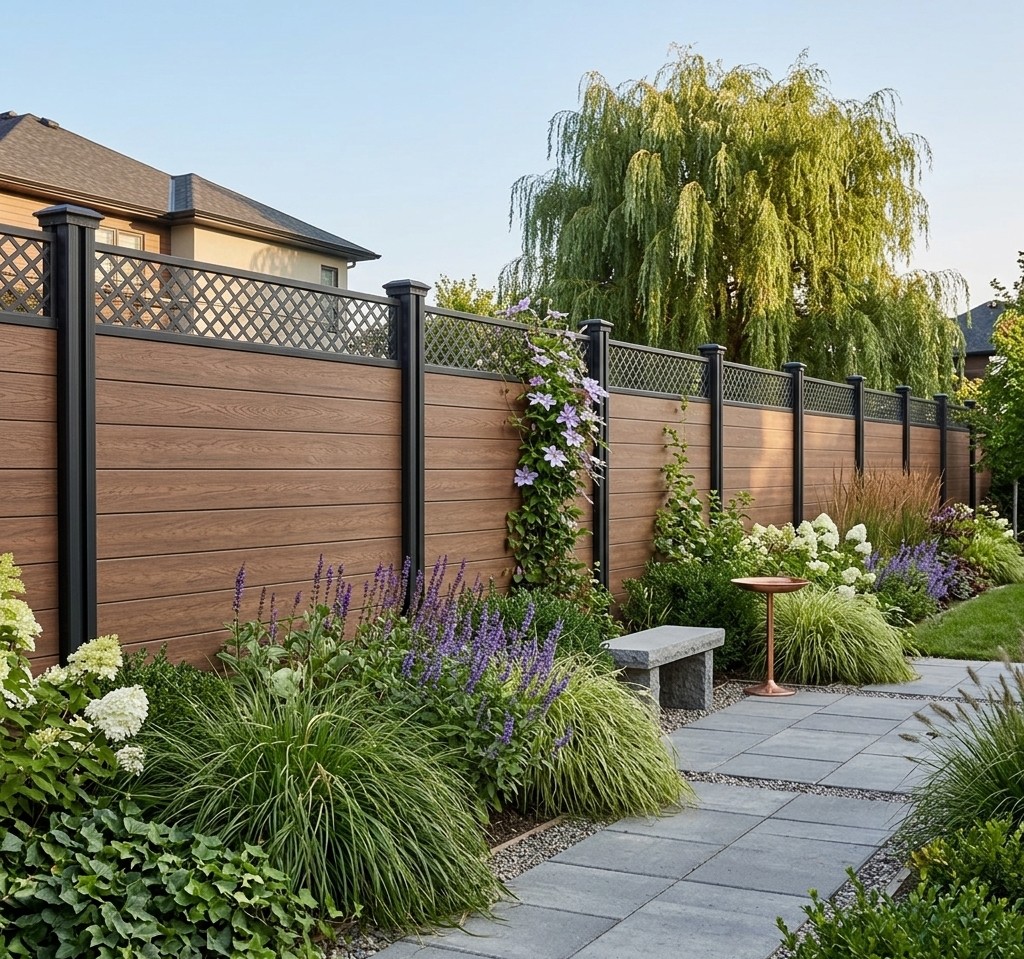
What Is Composite Fencing? The Complete Guide for 2026
If your garden fence is rotting, warping, or needs repainting every year, you are probably wondering what is composite fencing and whether it could solve the problem for good. Composite fencing combines wood fibre and recycled plastic into a single board that resists rot, fading, and splitting far better than solid timber. For UK homeowners tired of annual treatment and short-lived panels, it is becoming the go-to choice for boundaries, privacy screening, and garden definition. This guide explains exactly what is composite fencing, how it compares to timber, and what to look for before you buy.
What Is Composite Fencing Made From?
So what is composite fencing, in practical terms? It is a manufactured fencing material made by combining wood fibres with recycled plastic, then bonding them under heat and pressure into solid boards or panels. The wood fibre gives the board a natural look and feel, while the plastic content makes it resistant to moisture, rot, and insect damage in a way that pure timber cannot match.
Most composite fencing panels are supplied as a complete kit, including a matching post and a top cap, so the finish looks tidy and professional once installed. Celplas stocks composite fencing in a range of colours and heights, all manufactured for long-term outdoor use in British weather.
Knowing what is composite fencing made of also explains why it performs so consistently. Because the boards are manufactured rather than cut from a single piece of wood, every panel has a uniform density, colour, and texture. That means no weak knots, no warped boards, and no mismatched colour between one panel and the next, which is a common frustration with natural timber fencing.
What Is Composite Fencing Used For?
Composite fencing suits almost any boundary or privacy need around a home or commercial property. Common uses include:
- Defining garden boundaries between neighbouring properties
- Creating privacy screening around patios, decking, or seating areas
- Securing commercial perimeters where appearance matters as much as function
- Replacing rotten or storm-damaged timber panels with a longer-lasting alternative
- Pairing with composite decking for a coordinated outdoor look
Because it holds its colour and shape regardless of rain or sun exposure, composite fencing works equally well on exposed coastal plots and sheltered suburban gardens. For anyone weighing up garden upgrades in Blackpool and the wider North West, where wind and rain are a regular feature, weather resistance is usually the answer to what is composite fencing actually better at than timber.
Composite Fencing vs Timber: What Is the Real Difference?
The honest answer to what is composite fencing compared with timber comes down to maintenance and lifespan. Timber fencing is cheaper to buy initially, but it needs regular staining or painting to stop it rotting, warping, or splintering. Left untreated for a season or two, most timber panels start to grey, crack, or lean.
Composite boards do not need any of that upkeep. There is no painting, staining, or sealing required, and the colour is built into the material rather than applied on top, so it will not peel or fade unevenly. Over a five to ten year period, the lower maintenance cost of composite fencing often makes up for the higher upfront price, particularly for larger gardens with long boundary runs.
Where Timber Still Has the Edge
Timber remains a reasonable choice for short-term budgets or temporary boundaries, and it can be repaired board by board if damaged. Composite panels are generally replaced as a full section rather than patched, so timber may suit projects with a tighter initial budget. That said, once you factor in the cost of treatment products and replacement boards over several years, the gap between timber and composite fencing narrows considerably.
Key Benefits of Composite Fencing
Now that the question of what is composite fencing has been answered, the benefits over traditional materials become clear:
- Weather resistance – built to withstand wind, rain, and UV exposure without warping
- Low maintenance – no annual painting, staining, or treating
- Consistent appearance – colour and texture stay uniform across every panel
- Long lifespan – typically outlasts timber by several years with no upkeep
- Available in multiple heights to suit boundary, security, and privacy needs
- Supplied with a matching post and top cap for a complete, professional finish
What Is Composite Fencing Going to Cost You?
Composite fencing typically costs more per panel than basic timber lap panels, but less than premium hardwood or fully bespoke screening. The exact price depends on the height, colour, and finish you choose. When working out your budget, factor in that timber needs ongoing spend on treatment products and replacement boards over the years, while composite fencing has no recurring maintenance cost once it is installed.
Celplas supplies composite fencing nationwide, with free delivery available on orders over £100, so it is worth checking the full panel and post requirements for your boundary length before placing an order. Trade buyers and developers working across multiple properties often find that what is composite fencing worth becomes clearer once treatment costs are factored into the comparison.
Buying Guide: What to Check Before You Order
With the material and the benefits covered, choosing the right panel comes down to a short checklist. Work through this before placing your order:
- Measure your boundary accurately, including any slopes or uneven ground
- Decide on the height you need for privacy, security, or simple definition
- Check your local planning rules if you want a fence taller than two metres
- Choose a colour that complements your property and outdoor space
- Confirm whether posts, caps, and fixings are included in the panel price
- Plan whether you are installing into soft ground or onto existing concrete footings
Before ordering, it is worth checking the planning rules around boundary height. According to Planning Portal guidance on fences, gates and garden walls, most fences in England do not need planning permission provided they stay within two metres in height elsewhere on the property, or one metre where they sit next to a highway.
Installing Composite Fencing: What to Expect
The installation process is part of what is composite fencing all about in practice, not just on paper. Composite fencing can be installed either directly into soft ground or fixed onto existing concrete posts and footings. For soft ground installation, posts are typically set in concrete to a recommended depth, then left to cure before the panels are fitted. If you already have concrete posts in place, composite panels can often be slotted straight in, which speeds up the job considerably.
Many homeowners manage installation themselves over a weekend, although a tradesperson is recommended for longer boundary runs or uneven ground.
Composite Fencing FAQs
A few practical questions tend to follow once the basics are clear. Here are the ones we hear most often about what is composite fencing and how it holds up day to day.
Does composite fencing fade in the sun?
No. This is one of the most common questions behind what is composite fencing searches, and the answer is reassuring. Because the colour runs through the material rather than sitting on the surface, composite fencing resists fading even after years of direct sun exposure.
Can composite fencing be cut to size?
Yes, composite boards can be cut using standard tools, which is useful to know once you have decided what is composite fencing right for your boundary and need to fit it around an awkward corner or slope.
Is composite fencing more expensive than timber?
The upfront cost is usually higher, but the lack of ongoing treatment and replacement costs often balances this out over the life of the fence. Anyone still asking what is composite fencing worth in the long run usually finds the answer favours composite once five or more years of upkeep are added to the timber comparison.
Find the Right Product
Hopefully this has answered the question of what is composite fencing and why it has become such a popular choice across Lancashire and beyond. If you are ready to compare colours, heights, or panel options, browse the full composite fencing range at Celplas.
Not sure which panel or system suits your needs?
Our team is happy to help, contact us today.