
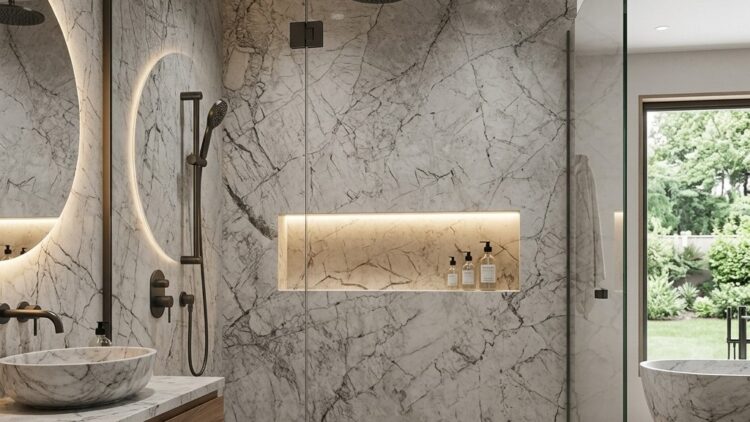
Wall Shower Panel: The Easy, Stylish Way to Beat Tile Mould
If you have ever scrubbed black mould out of shower grout, you already know why so many homeowners are switching away from tiles. A wall shower panel covers the entire enclosure in one continuous waterproof surface, so there is no grout line for damp or bacteria to gather in. It clicks together in an afternoon and never needs resealing.
This guide walks through what a wall shower panel actually is, where it works best, what it costs compared with retiling, and how to keep the ventilation and electrics around it safe and compliant.
It is a bigger topic than it first appears, since a shower enclosure has to cope with more standing water and steam than almost any other surface in the home. Getting the wall covering right the first time saves years of regrouting, resealing, and the inevitable mould treatment that comes with traditional tiling.
What Is a Wall Shower Panel?
A wall shower panel is a rigid PVC sheet, usually finished in a marble, sparkle, or plain colour effect, that clads directly onto the walls of a shower enclosure or wet room. Each panel has a tongue and groove edge, so one slots into the next to build a seamless, watertight surface across the whole wall.
Unlike ceramic tiles, a wall shower panel is fixed with panel adhesive rather than tile cement, and needs no grout lines at all. That single difference is what removes the mould and cleaning problems that come with traditional shower tiling.
Panels are typically supplied in lengths of 2.4 metres and around 10mm thick, which is enough to level out minor imperfections in the wall behind while still keeping the finished enclosure feeling compact. Most ranges carry a Class 1 fire rating and offer a degree of thermal and sound insulation as a side benefit of the denser core.
Shower Enclosure Versus Wet Room: Where a Wall Shower Panel Fits
In a standard shower enclosure with a tray and glass screen, a wall shower panel covers the three fixed walls behind the unit, giving a smooth backdrop that never chips or discolours from repeated water exposure.
In an open wet room, the same panel system extends further, often up full height across an entire bathroom wall, since there is no cubicle to contain the splash zone. Because the surface is fully waterproof rather than just surface sealed, it copes with constant standing water and steam far better than painted plaster or wallpaper.
Landlords and holiday let owners increasingly favour a wall shower panel in both settings, since guests and tenants are typically harder on grout and sealant than owner occupiers, and a wipe clean surface keeps turnaround costs down between bookings.
Family bathrooms benefit in a similar way. Children’s bath time tends to mean more splashing outside the immediate shower area, and a panelled wall shrugs off that kind of everyday wear far better than painted plaster or wallpaper ever could.
Cost Comparison: Wall Shower Panel Versus Retiling
Retiling a shower typically involves tile cement, grout, spacers, a wet saw for cuts around pipework, and several days of drying time before the enclosure can be used again. A wall shower panel replaces most of that list with adhesive and a Stanley knife, and the shower can usually be back in use within 24 hours.
Labour is the other major saving. Because there is no grouting stage and no waiting for cement to cure between rows, a competent DIYer can often panel a full shower enclosure in a single day, where retiling the same space might take a professional several days from start to finish.
For landlords managing several bathrooms, or anyone renovating more than one property, it is worth calling 01253 591 717 to check current panel stock and bulk pricing before committing to a full order.
There is also a knock on saving in ongoing maintenance. Grout typically needs resealing every one to two years to stay watertight, and discoloured or cracked grout is one of the most common reasons bathrooms start to look tired well before the tiles themselves wear out. A panelled enclosure sidesteps that cost entirely, since there is no grout to maintain in the first place.
Ventilation and Electrical Safety Around a Wall Shower Panel
Fitting a new wall shower panel is a good moment to check the room’s ventilation is up to standard, since trapped moisture behind any wall covering can eventually cause problems regardless of the surface material. Current UK guidance on extract ventilation for bathrooms is set out in Approved Document F, which covers minimum extraction rates for rooms without an openable window.
It is also worth remembering that any electrical work near a shower, such as moving a light fitting or extractor fan, falls under strict bathroom zone rules and should be carried out or signed off by a qualified electrician, regardless of how the surrounding wall is finished.
None of this affects how the panel itself is fitted, since a wall shower panel is glued in place with no cutting into existing wiring, but it is a sensible checklist item whenever a shower is being refreshed.
If your bathroom currently relies on an open window rather than mechanical extraction, it is worth checking whether that still meets current guidance before finishing the room, since inadequate ventilation is one of the most common causes of damp problems behind any wall covering, panels included.
Choosing Colours and Finishes for a Wall Shower Panel
Finishes range from clean white and grey concrete effects through to marble veining and black sparkle, so there is an option to suit almost any bathroom style, from a minimalist en suite to a bolder feature enclosure.
Pairing your panels with matching internal corners, external corners, and trims from the SPC and cladding range keeps every join looking factory finished rather than DIY. Ordering a free sample before committing to a full enclosure is always worth doing, since bathroom lighting can shift how a colour reads compared with a product photo.
Frequently Asked Questions
Can a wall shower panel go directly over existing tiles? In most cases yes, provided the existing tiles are sound, flat, and free from damp, which saves the time and mess of stripping them out first.
Do the joins need sealing? The tongue and groove system forms a watertight seal on its own, though a small bead of sealant around the shower tray or bath is still good practice at the base.
How long do they last? A well fitted wall shower panel typically lasts well over a decade with nothing more than routine wiping, since there is no grout to degrade over time.
Will it fit around a shower valve or shelf? Yes. Panels cut easily with a sharp knife or fine tooth saw, so fitters can neatly work around fixed fittings such as valves, shelves, and shower controls.
Get in Touch
A wall shower panel is one of the fastest ways to remove mould, grout, and ongoing maintenance from a shower renovation without compromising on style. Browse the full range online or call 01253 591 717 to speak with one of our product specialists about your project.