
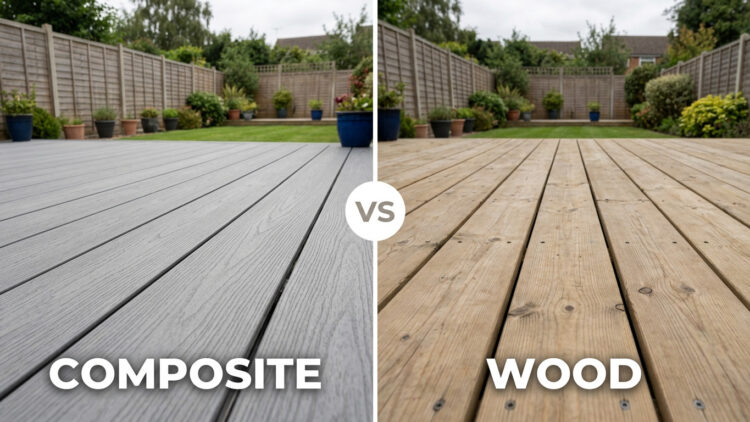
Composite Decking vs Wood: 5 Simple Ways to Choose
A new deck is one of the best upgrades you can make to a garden, but the first decision is a big one. Composite decking vs wood is the question every homeowner and landscaper faces, because the material you pick decides your costs, your weekends and how the deck looks in five years. Timber is traditional and cheaper to buy, while composite boards promise less upkeep. In this guide, we compare composite decking vs wood in five practical ways, so you can choose the right material for your garden and budget.
Composite Decking vs Wood: What Is the Difference
Wood decking is made from timber, usually pressure-treated softwood, although hardwood is also used. It has a natural grain and a warm, traditional look. It also needs regular care to stay in good condition outdoors.
Composite boards are made from wood fibres and recycled plastics. Designing Buildings explains that the mix of fine wood particles and polymers helps the boards resist the problems that affect timber. The result is a board that looks like wood but behaves more like a low-maintenance building product.
Understanding that basic difference makes the rest of the choice easier. Here are the five factors to weigh up:
- Cost, both upfront and over the years
- Maintenance and cleaning
- Durability in UK weather
- Looks, feel and comfort underfoot
- Fitting and fixings
1. Cost: Composite Decking vs Wood Upfront and Over Time
In composite decking vs wood, timber is the cheaper option to buy, which is why it suits small budgets and quick projects. Composite costs more upfront. That is the main drawback, and it is worth being honest about it.
The picture changes when you look at the long term. Timber needs treatment, staining or sealing every so often, and each product and weekend adds to the total. Composite boards need none of that, so many people find the gap narrows over the years. When you compare composite decking vs wood on cost, count the upkeep as well as the price tag.
2. Maintenance and Cleaning
This is where composite boards stand out. Designing Buildings notes in its comparison of composite and timber decking that composite is low maintenance and can be cleaned with soap and water, while timber needs regular upkeep and specialist products.
A typical routine for composite boards is simple:
- Sweep away leaves and debris regularly
- Wash with warm soapy water and a soft brush
- Rinse with clean water and let the boards dry
- Clear dirt from the gaps between boards so water can drain
Timber asks for more. It needs cleaning, then treating, then re-treating, and skipping a year can lead to green algae, greying and rot. If you enjoy the work, wood can be rewarding. If you would rather spend weekends sitting on the deck, composite decking vs wood is an easy call.
3. Durability in UK Weather
Britain is not kind to garden timber. Rain, frost, damp and shade all encourage rot, mould and insect damage. Pressure treatment helps, but timber still needs ongoing protection.
Composite boards resist weather, insects and fungal decay, according to Designing Buildings, which adds that they can last far longer than timber. Individual products differ, so always check the warranty and the guidance for your chosen boards. Boards that do not splinter or warp are also kinder to bare feet and pets.
Timber still has strengths. A damaged board can be patched or replaced, and well-kept hardwood can last for many years. For most gardens, though, composite decking vs wood on durability favours composite, especially in shaded or damp spots.
4. Looks, Feel and Comfort
In the composite decking vs wood debate, looks are personal. Timber has a natural grain that cannot be copied perfectly, and many people simply prefer the real thing. It also feels comfortable underfoot on a hot day. Composite offers a wide choice of colours and a consistent finish, and the boards keep their look without staining.
One honest point: composite boards can warm up in strong direct sun, so think about shade if you have a south-facing spot. Choose a lighter colour, and add a pergola or parasol if the deck will get a lot of afternoon sun.
Whichever you choose, finish the edges neatly. Trims hide cut ends and give the deck a smart, built-in look. Our finishing trims are designed to sit alongside composite products, so order them with your boards.
5. Fitting and Fixings
With composite decking vs wood, both materials need a solid, level frame with joists at the right spacing. Follow the manufacturer’s guidance, because composite boards and timber boards do not always need the same joist centres.
Timber and composite also expand and contract with temperature and moisture. Leave the gaps recommended in your instructions, and never fix boards tightly end to end. Designing Buildings points out that timber decks should use stainless steel fixings to avoid staining, so choose fixings to suit your boards.
- Plan the layout and measure the area carefully.
- Build a level, well-supported frame with good drainage.
- Lay the boards with the recommended expansion gaps.
- Fix with the correct screws or clips for your product.
- Finish the edges with trims for a neat result.
If you are also planning a matching garden fence, read our guide to composite fencing boards. Using the same material around the garden keeps the look consistent and the upkeep low.
Common Mistakes When Choosing Composite Decking vs Wood
Most regrets come from planning, not from the material. People who compare composite decking vs wood only on the sticker price are often surprised later. Avoid these slips:
- Choosing on upfront price alone and ignoring years of treatment
- Skipping ventilation and drainage under the deck
- Fixing boards tightly with no expansion gap
- Ordering too few boards, then struggling to match the batch
- Forgetting trims, which leaves cut ends exposed
Order a little extra and keep any offcuts for repairs. Whatever you decide on composite decking vs wood, buying everything in one order helps the colours match.
Composite Decking vs Wood: Which Should You Choose
Choose composite if you want low upkeep, long life and boards that stay looking neat with a simple wash. Choose wood if your budget is tight, you love natural timber and you are happy to treat it regularly.
Ask yourself a few questions before you decide:
- How much time do you want to spend on upkeep each year?
- Is your garden shaded, damp or sunny?
- Does the upfront cost or the long-term cost matter more?
- Do you want a natural grain or a consistent colour?
For most busy households, composite decking vs wood ends up favouring composite. Celplas supplies composite decking and finishing trims from Blackpool across the UK, with free delivery over £100.
Need Help Choosing
Composite decking vs wood is a personal choice, but the right answer is usually clear once you count the upkeep. Measure your space, think about sun and shade, and order trims and fixings together with your boards. Celplas also offers next-day delivery options to keep your project moving.
For product advice, bulk pricing, or a bespoke quote, contact Celplas directly.
Composite Decking vs Wood FAQs
Is composite decking worth the extra cost?
For many people comparing composite decking vs wood, yes, because it removes most of the upkeep. Compare the total cost over several years, not only the price on the day.
Does composite decking need sealing or staining?
No. Composite boards are usually kept clean with soap and water, so there is no need to stain or seal them. Always follow the care advice for your product.
Will composite decking fade or get slippery?
Colours can soften slightly over time, and any deck can get slippery when wet and dirty. Regular cleaning and choosing a grooved or textured board help.
Can I mix composite and timber?
You can, for example timber for a frame and composite for the surface. Check that the frame suits the boards you choose.