
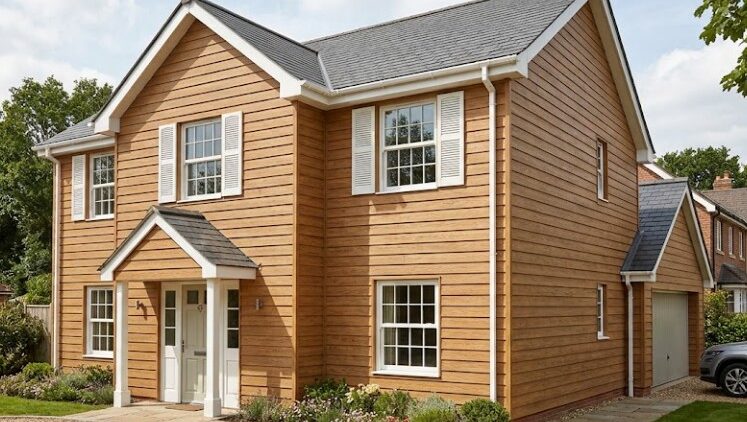
Cladding Exterior Wood: Timber vs PVC
Cladding Exterior Wood: 5 Honest Reasons PVC Shiplap Outperforms Timber
When homeowners and builders start researching cladding exterior wood options, timber seems like the obvious first choice. It looks great in photos, it has a long history in UK construction, and it feels like the natural thing to use. However, the reality is often quite different from the brochure. Rot, warping, regular treatments, and mounting maintenance bills are the side of the story that tends to get left out. This post looks honestly at both materials, so you can make the right call for your project without any surprises further down the line.
What Is Cladding Exterior Wood and Why Do People Choose It?
Cladding exterior wood refers to fixing boards or panels to the outside walls of a building to protect the structure from the elements and improve its appearance. Traditional timber has been used for this purpose for centuries across the UK, and its appeal is easy to understand. It has a warm, natural look, comes in a wide range of profiles including shiplap, featheredge, and tongue and groove, and can be painted or stained to match almost any property style.
Timber is still commonly used on new builds, self-build projects, extensions, and outbuildings. It suits both contemporary and traditional aesthetics, and when installed correctly with the right species, it can last for decades. Oak, larch, and western red cedar are among the more durable choices, with cedar in particular offering natural resistance to moisture and decay.
However, even the best timber species require ongoing upkeep. The UK climate, with its persistent damp, temperature swings, and limited sunshine hours, puts constant pressure on any house facade. That pressure adds up over time in the form of treatments, cleaning, recoating, and in some cases, full board replacement.
The Real Cost of Cladding Exterior Wood With Timber
One of the most important things to understand about cladding exterior wood with timber is that the upfront material cost is only part of the story. The ongoing maintenance is where costs can escalate. Softwoods like pine and spruce require preservative treatment before installation and regular recoating every few years. Even hardwoods need attention over time, whether that is oiling, staining, or cleaning away algae and grime.
According to Homebuilding, some timber types require finishing in a paint or stain, and different elevations can weather at different rates, leading to an uneven appearance that is difficult and costly to manage. When you factor in scaffolding access for upper storeys, the cost of treatments, and the labour involved, it becomes a recurring commitment rather than a one-time investment.
For many homeowners, this reality only becomes clear after the first maintenance cycle arrives. At that point, a lower-maintenance alternative starts to look very attractive.
5 Reasons PVC Shiplap Is a Smarter Choice for Cladding Exterior Wood
PVC shiplap cladding, like the 150mm boards available from Celplas, has become a popular choice for cladding exterior wood projects across the UK. Here are five honest reasons why it regularly wins out when homeowners and builders weigh up their options.
1. No Rot, No Warping, No Ongoing Treatments
PVC shiplap does not rot, warp, or absorb moisture. Where timber needs regular sealing and treatment to survive UK weather, PVC simply does not. You install it and it keeps performing year after year. This alone is a significant saving in time and cost over the lifetime of the product.
2. Fully Weatherproof in UK Conditions
North-facing elevations and exposed sites are particularly challenging for any wall covering. Rain, wind, and low UV combine to cause uneven weathering, algae growth, and surface deterioration on timber boards. PVC shiplap is built to handle exactly these conditions. It is weatherproof, UV-stable, and holds its appearance consistently across the whole building.
3. Available in Realistic Wood-Effect Finishes
One common objection to PVC as a cladding exterior wood alternative is that it looks artificial. Modern shiplap addresses this directly. Celplas stocks PVC shiplap in Light Oak, Rosewood, and Black Ash Anthracite Grey finishes that replicate the look of timber convincingly, alongside classic White. You get the appearance you want without the maintenance burden.
4. Suitable for Domestic and Commercial Buildings
PVC shiplap works across a wide range of building types. Whether you are covering a house extension, a garden office, a garage, or a commercial outbuilding, it performs consistently. Commercial properties in particular benefit from lower upkeep demands, since redecorating and treating large timber facades represents a significant cost that PVC removes entirely.
5. Easier to Install
Installing cladding exterior wood boards in PVC shiplap is straightforward. The boards are lightweight, easy to cut, and fix using standard fixings. There is no need to pre-treat before installation, no waiting for the material to acclimatise, and no concerns about movement as moisture levels change. For tradespeople and experienced DIY homeowners, it is a clean, manageable job.
Cladding Exterior Wood: Comparing the Two Options Side by Side
To help make the decision clearer, here is a straightforward comparison of timber versus PVC shiplap.
- Maintenance: Timber requires regular treatment, cleaning, and recoating. PVC needs only an occasional wipe down.
- Lifespan: Timber can last 20 to 40 years with consistent upkeep. PVC shiplap delivers long-term performance without the same demands.
- Cost over time: Timber has lower upfront costs in some cases, but maintenance accumulates significantly. PVC saves money over the long term.
- Appearance: Timber offers a natural aesthetic many homeowners prefer. PVC shiplap in realistic finishes replicates this look without the drawbacks.
- Weather resistance: Timber is vulnerable to UK conditions without proper treatment. PVC is fully weatherproof and needs no protective coatings.
- Sustainability: Responsibly sourced timber is a renewable resource. Long-lasting PVC reduces the waste associated with deteriorating boards.
Neither option is universally wrong. Timber remains a valid choice when the right species is selected, installed correctly, and maintained consistently. However, for the majority of homeowners and builders who want a reliable, low-maintenance finish, cladding exterior wood with PVC shiplap makes a compelling case.
What to Think About Before You Buy
Before committing to any wall cladding solution, there are a few practical points worth considering.
First, think about access for maintenance. If your project covers upper storeys that would require scaffolding to reach, the cost and disruption of upkeep on timber becomes even more significant. PVC removes that concern almost entirely.
Second, consider the profile and finish. PVC shiplap gives a clean, consistent board profile that suits both modern and traditional property styles. The 150mm width is one of the most popular choices for cladding exterior wood projects across the UK.
Third, check whether planning permission is required. In conservation areas or on listed buildings, any change to the facade may need approval from your local planning authority before work begins.
Fourth, use the right fixings. Stainless steel is the standard recommendation for outside use and will not corrode or cause staining over time.
Start Your Project Today
Celplas has been supplying PVC building products to homeowners and tradespeople across the UK from our base in Blackpool. Our 150mm PVC shiplap is an ideal solution for cladding exterior wood replacement and new-build projects, available in five colours with free delivery on orders over £100.
For more practical guides and product advice, visit our Celplas blog. Ready to order or need a quote? Get in touch with the Celplas team and we will get back to you promptly.